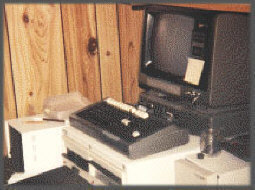
 My introduction to artificial intelligence dates back to the late 1970s when I first ran a program called Eliza on my Radio Shack TRS-80. The TRS-80, one of the first mass-produced personal computers, was introduced in 1977, and as a part-time Radio Shack employee at the time, I had firsthand experience with it. This machine, with its Zilog Z80 processor and cassette-based storage, was primitive by today’s standards, but it opened the door to a world of computing that fascinated me.
Eliza, originally developed in the 1960s at MIT by Joseph Weizenbaum, was one of the first chatbot programs. It simulated a Rogerian psychotherapist, responding to user inputs with simple, pattern-matching replies. By no means would it be considered artificial intelligence as we know it today. While it gave the illusion of conversation, it was a basic script that rephrased what users typed, showing just how easily people could attribute intelligence to software. When Eliza was ported to the TRS-80, it was a glimpse into what would eventually evolve into modern artificial intelligence.
The Path to Access-80
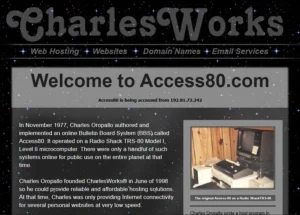 My early exposure to computing and AI concepts led me to create Access-80, a dial-up message board I launched in late 1977. This bulletin board system (BBS) was a precursor to the modern internet, allowing users to connect, share information, and interact with content long before the web as we know it. More details on Access-80 can be found at https://Access-80.com and at https://Access80.com. Each site is just a little different.
Understanding AI Through Prompt Engineering
 Today, artificial intelligence has grown beyond simple chatbot scripts. Large language models, like ChatGPT that I used in generating a roughed out version of this text, rely on advanced neural networks and vast amounts of data. With these resources they try to produce human-like responses. But at the core of these systems lies prompt engineering—the art of crafting the right input to get the desired output. This site is dedicated to helping people understand how prompts influence AI-generated responses. I’ll try to showcase a variety of topics and their corresponding outputs.
Another aspect of prompt engineering is a realization that I came to over time and experience. The prompts among the larger LLMs (large Language Models), like ChatGPT, Google Gemini, and Grok, behave similarly. By this, I mean a well defined prompt will produce similar results.
A Brief History of Artificial Intelligence
AI as a concept dates back to ancient history, but the modern field emerged in the 1950s. Early pioneers like Alan Turing laid the foundation for machine intelligence. By the mid-20th century, researchers began developing more sophisticated programs. These programs could solve problems, play games, and simulate human conversation. The 1980s and 1990s saw advances in expert systems, and by the 2000s, machine learning took center stage. Today, AI powers everything from voice assistants to self-driving cars, transforming the way we interact with technology.
On this site, you’ll find practical examples of my use of AI in action. By experimenting with different prompts and seeing how AI responds, you’ll gain a deeper understanding of how this technology works. And best of all find out how you can make it work for you.
Explore, Experiment, and Learn
Artificial intelligence is no longer a futuristic concept; it’s here. It’s shaping our daily lives. Whether you’re new to AI or an experienced user, I invite you to explore the prompts, test different ideas, and expand your understanding of this incredible technology.