
ChatGPT on EditPlus Format Syntax to Clean HTML Text

OpenAI ChatGPT LogoOne of my favorite Windows based text editors is EditPlus (see https://editplus.com/ for more details). I have been using it for quite a while. I like using it to “clean” chunks of text from the code page in WordPress posts. On occasion, a lot of additional, unnecessary junk codes from word processors can end up being inserted into posts. In some cases, this can wreak havoc on the page outputs. Such havoc can be difficult to troubleshoot. So the EditPlus format syntax is important for helping clean up my HTML code.

Cleaning up EditPlus Format Syntax

The output on this will save me tons of time when processing code for my various WordPress posts.

So this is another great use for ChatGPT 5.2. Here is the chat below, starting with my prompt:

I am using EditPlus to try to clean up some coding on a WordPress page. The HTML content is full of items like these:
<p data-start=”822″ data-end=”841″>
(Where the quoted numbers vary on each line they appear)
and these:
<li data-start=”842″ data-end=”882″>
and these:
<strong data-start=”953″ data-end=”981″>
and these:
<ol data-start=”984″ data-end=”1345″>

I believe I need to clean up the code so every occurrence of:
‘ data-start=”984″ data-end=”1345″‘
is deleted.

Is there a search and replace way to do this in EditPlus? Even if I have to do it 3 times due to the possible different sizes of the quoted numbers that would be easier than going through hundreds of lines of code.

Yes. This is exactly what regular expression search & replace is for, and EditPlus can do it cleanly in one pass.

You do not need to do this three times.


The Goal (restated clearly)

You want to remove every occurrence of this pattern:

 data-start="NUMBER" data-end="NUMBER"

…where the numbers vary in length, and leave the HTML tags intact.

Example input:

<p data-start="822" data-end="841">
<li data-start="842" data-end="882">
<strong data-start="953" data-end="981">
<ol data-start="984" data-end="1345">

Desired output:

<p>
<li>
<strong>
<ol>

✅ The Correct EditPlus Solution (One Pass)

1. Open Search → Replace (Ctrl + H)

2. Enable Regular expression

Check the box labeled:

☑ Regular expression

3. Use THIS Find pattern

\sdata-start="\d+"\sdata-end="\d+"

What this does

  • \s → leading space (prevents breaking the tag)
  • data-start=" → literal match
  • \d+ → any number of digits
  • " data-end=" → literal
  • \d+ → any number of digits
  • " → closing quote

This safely matches only the unwanted attributes.


4. Replace with (leave EMPTY)

[leave blank]

5. Click Replace All

Done. Hundreds of lines cleaned instantly.


🔍 Optional: Preview First (Recommended)

Before Replace All:

  • Click Find Next
  • Verify it highlights exactly what you want removed

❌ Do NOT use these weaker methods

Avoid:

  • Searching for fixed numbers
  • Multiple passes
  • Manual deletion
  • Searching for data-start= alone (could leave broken spacing)

🧠 Why this is safe for WordPress

  • Does not alter tag names
  • Does not touch attributes other than the two specified
  • Preserves valid HTML
  • Works regardless of number size

If you want, I can also give you:

  • A backup-safe variant
  • A version that handles reversed attribute order
  • A macro version for reuse
  • Or a cleanup regex for other AI-generated HTML junk

Just say the word.

ChatGPT Diagnosing a 1981 Corvette Transmission Issue

This is a great example of a Corvette transmission issue that came up with my Corvette that I was able to get some help with from ChatGPT. I can’t complain too badly about my Corvette, especially since my 1981 Corvette was manufactured in 1980 and sold as a 1981 model. That makes it about 46 years old at the time of this writing! Looking back at my records, I see that I purchased it (from a friend of mine who has long since passed away) on June 29, 2009. He had told me that he acquired the 1981 Corvette from its original owner about 1994, some 15 years earlier, and that it had sat idle for the previous 10 or more years while that owner had it.

As an aside, this Corvette happened to be the first I had ever driven. When traveling down the east coast now and then, my friend, Stanley Crafton, a top realter at the time in the Richmond, VA area, on occasion offered the Corvette to me to take Susan out to lunch while we were there.

My Corvette Transmission Issue

Susan and I were returning from dropping off our Acadia for an inspection at Frazier’s Garage in Marlborough. The Corvette had just been inspected. I’m stopped at the light at the intersection of 101 & 202, ready to make the left turn to downtown Peterborough, NH. We were maybe two miles from home.

I step on the gas to proceed left and – nearly nothing. The car barely starts to go. It’s an automatic transmission with a stick shift in the center console. Quickly fumbling around, I move it down to first gear gear, and it seems to move along normally. Moving through the intersection, I put it in second gear and it continues to move along. A transmission issue is not what I need. In fact, one never needs that! There is never a good time for car trouble.

OpenAI ChatGPT LogoLuckily I was able to make it home in second gear and put it in the garage.

Now to figure out the next steps.

To do that, I started a chat with ChatGPT describing the symptoms. That chat follows below.


Describing the Corvette Transmission Issue to ChatGPT 5.2

I believe I have an issue with my automatic transmission in my 1981 Corvette. When I place it into drive, it acts like a standard with a bad clutch, car struggles to move at all. 1st gear seems to work fine, and can place it into 2nd gear and it goes. Reverse works fine. Am hoping to be able to drive it about 14 miles to my mechanic tomorrow. What are your thoughts?

Short version: you might be able to limp it to the shop, but there’s real risk. Here’s how I’d think about it.


What the symptoms point to

Given an automatic transmission in a 1981 Corvette:

  • Drive (D) barely moves / slips badly
  • Manual 1st works
  • Manual 2nd works
  • Reverse works normally

That combination usually points to a forward clutch pack or forward sprag problem, not the whole transmission.

In plain terms:

  • Drive uses the forward clutch first, then shifts.
  • Manual 1 and 2 bypass or limit some of that logic.
  • Reverse uses a different clutch circuit entirely.

That’s why it feels like a bad clutch, even though it’s an automatic.

Common causes on these cars:

  • Worn or burned forward clutches
  • Hydraulic leak in the forward circuit
  • Sticking valve body
  • Very low or aerated transmission fluid

Before you even try to drive it (important)

Do these checks before starting the trip:

  1. Check transmission fluid hot, engine running
    • Level correct?
    • Color bright red or dark/burnt?
    • Burnt smell = bad news
  2. If fluid is low
    • Top it off only with the correct ATF
    • Low fluid can cause exactly what you’re describing
  3. Do NOT rev it hard in Drive
    • That will cook the clutches quickly if they’re slipping

Can you drive it 14 miles?

Possibly — but only if you baby it.

Safer approach:

  • Start off in manual 1st
  • Shift manually into 2nd
  • Avoid Drive if possible
  • Keep RPMs low
  • No full throttle
  • No hills if you can avoid them
  • No stop-and-go traffic if possible

⚠️ Big risk:
If the forward clutch is already slipping, continued driving can:

  • Burn the clutches completely
  • Contaminate the fluid with debris
  • Turn a rebuildable transmission into a full rebuild

When I’d say “don’t drive it”

Do not attempt the drive if:

  • It won’t move without heavy throttle
  • You hear grinding, banging, or whining
  • Fluid is black and smells burned
  • It suddenly loses even manual 1st or 2nd

At that point, a flatbed is cheaper than more damage.


Bottom line

  • Your diagnosis instinct is solid — this does behave like a clutch failure
  • It’s likely internal, not linkage-related
  • You may limp it there using manual gears
  • But every mile risks making it worse

If you want, tell me:

  • Which transmission it has (TH350 or TH400)
  • Fluid condition
  • Flat vs hilly route

I can give you a “best possible survival drive plan” for tomorrow morning.

Since its a hilly route, I’m going to go the flatbed route…

That’s the smart call 👍 — especially with hills in the mix.

On a hilly route, an already-slipping forward clutch would be under constant load. One bad pull on an incline could finish it off completely, and then you’re looking at more heat, more debris, and a more expensive rebuild.

By choosing a flatbed:

  • You avoid further clutch damage
  • You keep the transmission rebuildable
  • You give your mechanic a much cleaner starting point
  • You save money in the long run

When you talk to the mechanic, mention exactly this behavior:

  • Barely moves in Drive
  • Manual 1st and 2nd work
  • Reverse works normally
  • Feels like a bad clutch

That description will immediately steer them toward the forward clutch / hydraulic circuit, which saves diagnostic time.

If you want, after the mechanic looks at it, you can come back with:

  • Their preliminary diagnosis
  • Whether it’s TH350 or TH400
  • Rebuild vs repair options

Happy to help you sanity-check whatever they recommend.

No likelihood of it being a linkage issue?

Short answer: very unlikely.

Here’s why a linkage issue doesn’t fit your symptoms:

What a linkage problem usually causes

  • Wrong gear selected (PRNDL mismatch)
  • No Park or no Reverse
  • Starts in the wrong gear
  • Transmission won’t go fully into a gear

What you’re actually seeing

  • Reverse works perfectly → linkage is reaching full travel
  • Manual 1st and 2nd work → valve body is being commanded correctly
  • Drive slips badly → hydraulic/clutch problem inside the transmission

If the linkage were misadjusted:

  • Manual ranges would usually be affected too
  • Reverse would often be weak or absent
  • You’d see inconsistent or “in-between” gear behavior

You’re seeing clean, repeatable behavior by range, which strongly points to internal clutches or hydraulic circuits, not external linkage.

One narrow exception (still unlikely)

A severely misadjusted or damaged detent/kickdown mechanism could cause odd Drive behavior — but it would not selectively spare manual 1–2 and reverse. That’s the key tell.

Bottom line

  • Linkage issue: ~5% chance
  • Internal forward clutch / hydraulic issue: ~95% chance

You absolutely made the right call with the flatbed.
If it were linkage-related, the mechanic will spot it in minutes — but I’d be very surprised if that’s what they find.

If you want, once they confirm the transmission model and diagnosis, I can help you evaluate repair vs rebuild vs replacement options realistically.

What do you suppose this might cost to get fixed?

Here’s a realistic ballpark for what this kind of issue usually runs — based on age, model, and typical Corvette automatic problems:

Likely Repair Scenarios

1. Minor internal repair (low end)

If the problem is a worn forward clutch pack or a valve body issue

  • New clutches, friction plates
  • Possible seal kit
  • Valve body service (if needed)
  • Labor

Typical cost: $1,000–$1,800
This assumes no major damage, and the transmission stays in the car.


2. Mid-range rebuild

If internal wear is moderate, and more parts need replacing

  • Full clutch pack replacement
  • New seals/accumulators
  • Bands (if applicable)
  • Torque converter checked/refurbished
  • New filter and fluid

Typical cost: $1,800–$2,800


3. Full transmission rebuild

If there’s significant wear or damage (burnt clutches, worn drum, down to bearings)

  • Full teardown and rebuild
  • Machine work as needed
  • New torque converter
  • New gaskets, seals, filter, fluid

Typical cost: $2,800–$4,000+

For a classic car like a 1981 Corvette, many shops will push toward a full rebuild because:

  • Parts are old
  • Wear tends to be more widespread
  • Reliability matters — especially on hills

Other Possibilities That Could Alter Cost

Valve body only

If the mechanic finds a stuck valve or worn passage land:

  • Clean / repair valve body
  • Replace gaskets/seals

Possible cost: $500–$900
(This is hopeful and depends on condition.)


Torque converter issue only

If the converter’s clutch isn’t engaging internally:

  • Replace torque converter

Typical cost: $600–$1,000

This can cause the “slipping in Drive” feel you’re describing.


What to Ask Your Mechanic

When they inspect it, ask:

  1. Do the forward clutches show wear or burning?
  2. Is the valve body functioning normally?
  3. Is the torque converter clutch engaging?
  4. Is a rebuild recommended vs a partial repair?
  5. Can I keep the old core for a discount?
  6. What warranty comes with the repair?

Warranty Expectations

Good shops usually offer:

  • 12–24 months / 12,000–24,000 miles on rebuilds
  • Some offer longer coverage if premium parts are used

Final Take

  • Simple hydraulic/clutch service might be ~$1,000
  • A proper rebuild is closer to $2,000–$3,500
  • Extreme damage can go north of $4,000

If you get a detailed estimate from your mechanic, send it here and I can help you decide if it’s fair.

Would you like help identifying whether the trans is a Turbo 350 or Turbo 400? That will refine costs and parts availability.

How would I identify it? All I’m certain of is the engine is 350.

You can identify the transmission without taking anything apart, and you don’t need to know more than “it has a 350 engine.” Here are the reliable ways, from easiest to most definitive.


Easiest & most reliable: Transmission pan shape

Get under the car (engine off, cool), and look at the oil pan shape on the transmission.
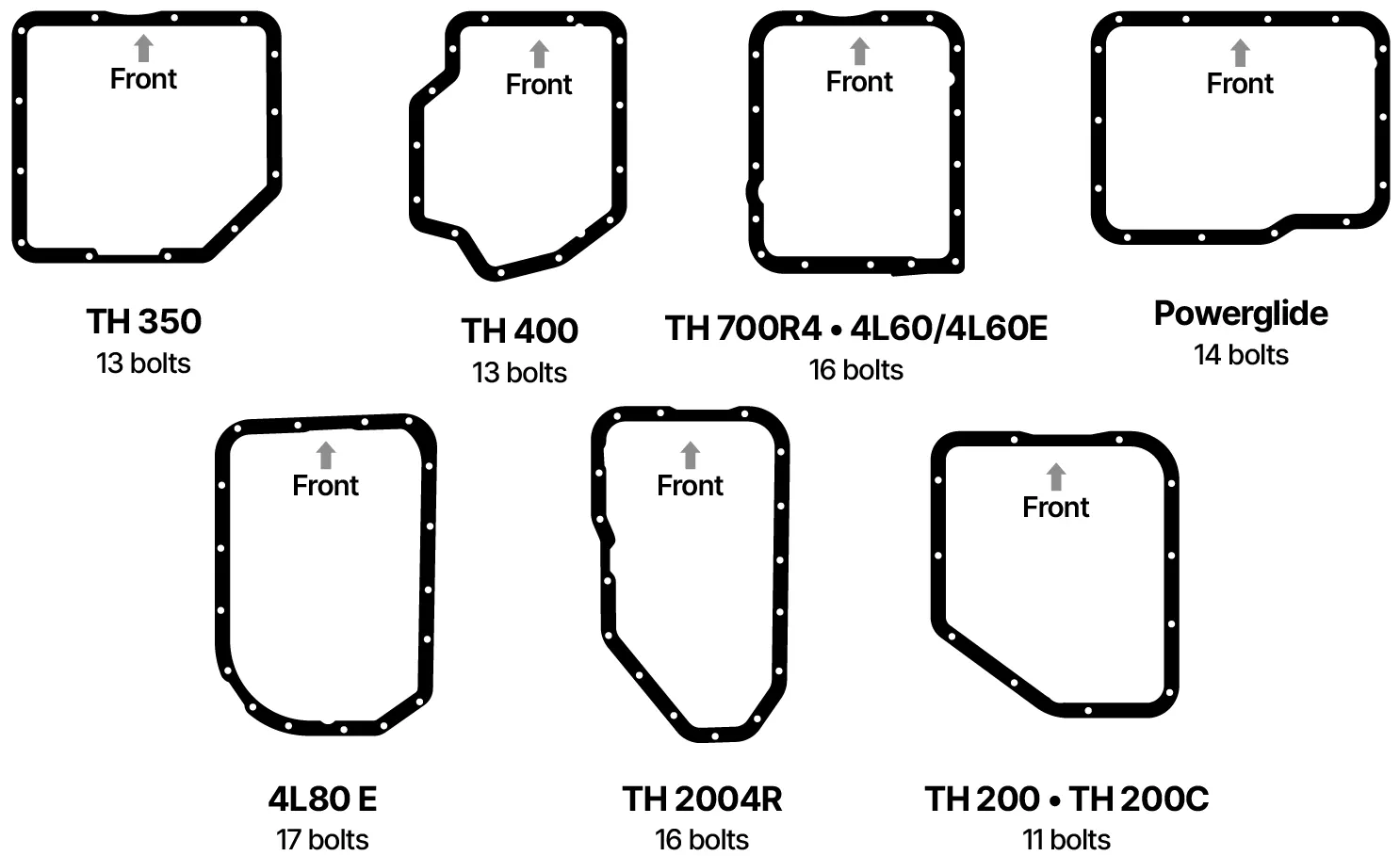
7 General Motors Transmission Shapes

TH350 (Turbo-Hydramatic 350)

  • Pan is almost square
  • One corner is clipped/angled
  • Typically 13 bolts
  • Smaller overall case

TH400 (Turbo-Hydramatic 400)

  • Pan looks more irregular
  • Has a distinct bulge or “ear” on one side
  • Typically 13 bolts, but the shape is very different
  • Heavier, beefier case

👉 If you remember “one corner clipped = TH350”, you’ll get it right 90% of the time.


Driveshaft size (secondary check)

If you can eyeball the driveshaft yoke:

  • TH350 → smaller slip yoke
  • TH400 → noticeably larger, thicker yoke

This helps confirm what you see with the pan.


Case length (rough check)

  • TH350 → shorter case
  • TH400 → longer and bulkier

Not as definitive unless you’ve seen both before, but useful.


What it was likely from the factory (helpful context)

For a 1981 Corvette with a 350:

  • TH350most common
  • TH400 → usually paired with big-block or high-performance packages

Unless the car was modified earlier in life, odds favor TH350.


Why this matters for cost & repair

  • TH350
    • Cheaper to rebuild
    • More parts availability
    • Simpler internals
  • TH400
    • Stronger unit
    • More expensive parts
    • Slightly higher labor cost

That difference alone can swing a rebuild estimate by $500–$1,000.


Quick checklist for tomorrow (mechanic-friendly)

Tell your mechanic:

  • “Drive slips badly”
  • “Manual 1 and 2 work”
  • “Reverse is solid”
  • “Feels like forward clutch loss”
  • “Likely TH350, but please confirm by pan shape”

That puts them right on target immediately.

If you want, you can:

  • Snap a quick photo of the pan
  • Describe the shape (“square with clipped corner” vs “odd with bulge”)

I can confirm it instantly from that.
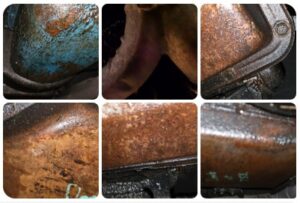
1981 Corvette Underside Pictures
It was difficult to take pics under the car. Not sure if you can tell from these.

Yes — I can tell from these, and you did a good job given the space 👍

Bottom line

That is a TH350 (Turbo-Hydramatic 350).

How I know

From your photos:

  • The transmission pan is basically square
  • One corner is clearly clipped/angled
  • No side “bulge” or ear like a TH400
  • Case size and proportions match a TH350

Those features together are definitive. A TH400 pan has a very different, asymmetric shape with a pronounced bulge — yours does not.

What that means for you

  • Most common automatic behind a small-block 350 Corvette
  • Cheaper and simpler to rebuild than a TH400
  • ✅ Parts are plentiful
  • ✅ Any competent transmission shop knows this unit well

Cost reality (refined now that we know it’s a TH350)

Given your symptoms (forward clutch slip):

  • Best case (valve body / limited clutch damage): ~$1,000–$1,500
  • Typical rebuild: ~$1,800–$2,800
  • Worst case (burnt hard parts): ~$3,000–$3,500

That’s assuming no performance upgrades. Stock rebuilds are straightforward.

One more thing worth noting from the photos

I see:

  • Heavy grime and age, but no catastrophic case damage
  • No obvious external cracks
  • Looks original or very old — which supports internal wear rather than adjustment

What to tell the mechanic (exact wording)

“It’s a TH350. Drive slips badly, but manual 1 and 2 are solid and reverse is strong. Feels like a forward clutch issue.”

That sentence alone saves them diagnostic time.

If you want, once they give you an estimate, post it here and I’ll tell you whether it’s fair or padded — and what questions to push back with if needed.

One of the pics looks like it shows something written on the bottom of the transmission cover?

Good eye — yes, one of your photos does show writing, and it’s nothing to worry about.

What that writing almost certainly is

That light blue/green marking on the transmission pan is typically:

  • Factory inspection chalk / paint pen
  • Rebuilder’s mark (if it was ever serviced)
  • Salvage yard or inventory marking

On TH350s, it’s very common to see:

  • Random letters or numbers
  • Partial codes
  • Handwritten marks that don’t correspond to stamped VINs

They were often applied:

  • During assembly
  • During quality control checks
  • During prior removal or installation

What it is not

  • ❌ Not a crack indicator
  • ❌ Not a leak trace
  • ❌ Not a warning sign
  • ❌ Not related to your current slipping issue

The pan itself shows surface rust and oil film, which is normal for a 40+ year-old transmission, but no structural damage.

Why it actually helps a little

That kind of marking often means:

  • The transmission has likely been out of the car before
  • Or at least handled or inspected at some point in its life

That aligns with:

  • Age-related clutch wear
  • A unit that’s simply reached the end of its service life

Bottom line

You spotted it correctly, but:

  • It’s just a marker notation
  • It has zero diagnostic significance
  • Your problem is still almost certainly internal forward clutch / hydraulic

At this point, you’ve done everything right:

  • Diagnosed symptoms accurately
  • Avoided further damage
  • Identified the transmission correctly
  • Chosen the safest transport option

Once the shop drops the pan, the fluid and debris will tell the full story. If you want, when they do that, tell me:

  • Fluid color
  • Smell
  • Amount of material in the pan

That alone can predict rebuild scope pretty accurately.

The car has 110,000 miles on it. I am the third owner. I bought it from a friend who basically let it sit for about 10-15 years. I believe I acquired it around 2010.

That history actually explains almost everything you’re seeing — very cleanly.

Why this failure makes sense with that mileage & storage

  • 110,000 miles on a TH350 is already full-life territory
  • Add 10–15 years of sitting, and the odds swing hard toward internal failure

When an automatic sits that long:

  • Clutch friction material dries out and flakes
  • Seals and O-rings harden and shrink
  • Hydraulic pressure bleeds off internally
  • First thing to go is usually the forward clutch

That’s exactly the circuit used in Drive.

Why it didn’t fail earlier

Manual ranges working is classic:

  • Manual 1 and 2 apply different clutch/band combinations
  • Reverse uses a totally separate clutch pack
  • So the failure can hide until one day it just… doesn’t

Nothing you did recently caused this. This is age + time, not abuse.

What the shop is likely to find

Given your description, I’d expect:

  • Burned or glazed forward clutch plates
  • Hardened seals throughout
  • Debris in the pan, but probably no catastrophic metal
  • Torque converter full of old fluid and clutch dust

That points toward:
➡️ A straightforward rebuild, not a mystery failure.

Is it worth fixing?

In your case: yes, assuming the car is otherwise solid.

Reasons:

  • TH350 rebuilds are predictable
  • Parts are cheap and available
  • Once rebuilt, it’s good for another 80–100k miles
  • It preserves originality

This is not a “throwaway” transmission.

Budget expectation (realistic)

Given everything:

  • Most likely: $2,000–$2,800
  • Upper end: ~$3,000 if they replace hard parts
  • Anything much higher should come with upgrades or a long warranty

One important suggestion (worth mentioning)

Ask the shop about:

  • Upgraded clutches (modern friction material)
  • New torque converter (don’t reuse the old one)
  • Shift kit? (optional — mild street version only)

A mild update improves longevity without changing drivability.


Bottom line

Your car didn’t “break” — it aged out gracefully.
You caught it before total failure, which saves money.

If you want, when the mechanic gives you their findings, post them here and I’ll translate the transmission-shop language into plain English and tell you whether the recommendation makes sense.

What is a shift kit?

Great question — and it’s one of those terms that gets over-hyped or misunderstood.

Short, plain-English answer

A shift kit is a set of small internal changes to the transmission’s valve body that controls how and when it shifts.

It does not add horsepower.
It does not turn the car into a race car (unless you choose that type).


What the valve body does (quick context)

Inside your TH350:

  • The valve body routes hydraulic fluid
  • Fluid pressure applies clutches and bands
  • Timing and pressure determine shift feel

A shift kit tweaks that logic.


What a shift kit can change

Depending on the kit and how it’s installed, it can:

  • Firm up shifts (less slipping)
  • Reduce heat during shifts
  • Improve clutch life
  • Correct known factory weaknesses
  • Eliminate lazy or “mushy” shifts

The key phrase is “depending on how it’s set up.”


Types of shift kits (this matters)

1. Mild / street shift kit (recommended, if any)

  • Slightly firmer shifts
  • Faster clutch engagement
  • No harsh banging
  • No change to driving style
  • Better longevity

This is what most rebuilders mean when they suggest one.

2. Performance / firm shift kit

  • Noticeably firm shifts
  • You feel each gear change
  • Some people love it, some hate it
  • Not ideal for a mostly stock Corvette

3. Full manual / race kit

  • You shift every gear yourself
  • Harsh engagement
  • Not street-friendly

You do not want this.


Why a mild shift kit can help your situation

Given:

  • Age
  • Storage time
  • Forward clutch wear

A mild kit:

  • Reduces clutch slippage
  • Lowers heat
  • Helps prevent exactly the kind of failure you experienced

Think of it as modernizing the hydraulic logic, not hot-rodding it.


What it feels like in real life

With a mild street kit:

  • Car still drives normally
  • Shifts feel “cleaner”
  • No jerking
  • No drama
  • Most passengers won’t notice anything changed

Cost impact

  • Parts: usually $50–150
  • Labor: usually included during rebuild
  • Net cost increase: minimal

If they’re already rebuilding it, it’s cheap insurance.


What to say to the mechanic (exact wording)

“If you rebuild it, I’d be open to a mild street shift kit — nothing aggressive.”

That sentence keeps them from installing something you won’t like.


Bottom line

A shift kit:

  • Is optional
  • Can extend transmission life
  • Should be mild for your car
  • Should not make it harsh

If you want, I can also explain lockup vs non-lockup converters, or whether your Corvette even uses one (1981 was a transition year).

Ever since I’ve owned this car it seemed to slam into gear when I put it in drive. I always thought it may have been idling too high.

That observation is very important, and your instinct about idle speed was reasonable — but it also points to something deeper that’s been brewing for a long time.

Why it “slammed” into Drive

On a TH350, a hard engagement into Drive is usually caused by excessive line pressure at idle or delayed clutch fill, not driver error.

The most common causes are:

1. Hardened internal seals (very likely in your case)

  • Sitting 10–15 years dries and hardens seals
  • Fluid drains back internally
  • When you select Drive, pressure builds suddenly
  • Result: bang / slam into gear

This is a classic aging automatic transmission symptom.

2. Vacuum modulator issue

  • The TH350 uses a vacuum modulator to regulate line pressure
  • Low engine vacuum or a bad modulator = higher pressure
  • Higher pressure = firmer, sometimes harsh engagement

If the diaphragm is weak or leaking, the transmission thinks the engine is under load even at idle.

3. Idle speed slightly high (contributing, but not root cause)

  • High idle can exaggerate engagement harshness
  • But by itself, it usually doesn’t cause a true “slam”
  • More often, it just makes engagement feel quicker

So you weren’t wrong — it just wasn’t the whole story.


Why that slam matters now

That harsh engagement over many years likely:

  • Shock-loaded the forward clutch
  • Accelerated friction wear
  • Masked seal deterioration until it finally slipped instead

In other words:

The transmission has been warning you for a long time.

This wasn’t sudden. It finally crossed the line from harsh engagement to inadequate clutch holding.


Why it didn’t bother shifting otherwise

Once moving:

  • Hydraulic pressure stabilized
  • Clutches stayed applied
  • Everything felt “fine”

That’s why it could feel normal for years, then suddenly fail.


What a rebuild will correct

A proper TH350 rebuild will:

  • Replace all hardened seals
  • Restore proper clutch fill timing
  • Normalize engagement feel
  • Eliminate the slam into Drive
  • Restore smooth, controlled engagement

If a new vacuum modulator and proper idle setup are done at the same time, the difference will be very noticeable.


What to tell the mechanic (this helps diagnosis)

Say this exactly:

“Ever since I’ve owned it, it always slammed into Drive. Now Drive slips, but manual 1 and 2 are solid.”

That sentence tells an experienced transmission tech:

  • Seal deterioration
  • Forward clutch wear
  • Long-term pressure imbalance

They’ll nod immediately.


Bottom line

  • You didn’t imagine it
  • It wasn’t just idle speed
  • It was a long-term internal hydraulic issue
  • The failure you’re seeing now is the natural end result

You caught it at the right moment — before total failure.

If you want, once it’s rebuilt, I can walk you through:

  • Proper idle RPM target
  • Vacuum checks
  • What “normal” engagement should feel like

That way you’ll know instantly if anything is off in the future.

Just as a final addition, the transmission fluid level is fine and its color looks like new.

That detail actually fits the picture perfectly — and it explains why this can feel so confusing.

Why “fluid looks perfect” doesn’t rule anything out

In a TH350, fluid condition and clutch condition are not the same thing.

You can have:

  • Bright red fluid
  • No burnt smell
  • Correct level

…and still have failed or failing clutches.

Here’s why.


What likely happened in your case

Because the car:

  • Sat 10–15 years
  • Was driven lightly afterward
  • Probably had fluid changed at some point

The fluid itself:

  • Never overheated
  • Never turned black
  • Never smelled burnt

But internally:

  • Friction material dried and glazed
  • Seals hardened and leaked pressure
  • Clutches slowly lost holding power

So the fluid stayed clean while the mechanical grip disappeared.


Why it slammed into Drive and now slips

Those two symptoms together are key:

  • Slam into Drive → delayed clutch fill / seal leakage
  • Slip in Drive now → forward clutch can’t hold anymore

That’s a classic end-of-life TH350 pattern.


Why Reverse and manual ranges still work

  • Reverse uses a different clutch pack
  • Manual 1 & 2 apply clutches differently and limit shift logic
  • So they survive longer

This selective failure is normal — not mysterious.


One more possibility (rare, but worth mentioning)

A vacuum modulator can cause harsh engagement and slipping if it’s failed internally, even with clean fluid.

However:

  • It usually affects shift timing too
  • It usually doesn’t fully spare manual ranges

Your symptom pattern still points to internal wear, not just a modulator.


What the pan will tell the final truth

When the shop drops the pan, they’ll look for:

  • Clutch material (dark, flaky debris)
  • Amount of sediment
  • Any metal (unlikely from your description)

Given your fluid looks new, I expect:

  • Moderate clutch debris
  • No hard-part failure

That’s the best possible outcome for a rebuild.


Bottom line

Clean fluid does not mean a healthy transmission.
In your case, it actually supports:

  • Long-term, low-heat wear
  • Age-related seal and clutch failure
  • A rebuild that should go smoothly

You’ve done everything right — diagnosis, transport choice, and communication. At this point, it’s in the shop’s hands.

When they open it up, feel free to bring their findings back here. I’m happy to help you interpret them or sanity-check the estimate before you approve anything.

ChatGPT5 – Check Notification/Bounce Email for Phishing

I spotted a clever phishing attempt that looked like a mail-delivery delay notice. It claimed a message from our alias, we******@**********ks.com
, was stuck in a Czech mail queue. But the headers failed SPF, DKIM, and DMARC checks. That means the email didn’t come from our systems—it was likely forged. Plus, real bounce messages usually include the undelivered email in plain text—not a suspicious attachment from a weird server. Bottom line: it’s backscatter spam, not a legitimate bounce. Don’t open the attachment. Just delete it and stay cautious.

OpenAI ChatGPT Logo
I received what I believed was cleverly designed phishing attempt in my inbox.

My thought was to examine it to determine a little more detail about it and see what AI thought of it. The “———-” characters are something I tend to use as delineators when inserting these long streams of data in as part of my prompt. My experience with all of the AI systems I use has been that they are understood as delineation strings.

I discovered that email addresses were automatically wiped from the material as displayed in this site by a great anti-spam plugin called CleanTalk. I highly recommend CleanTalk and it can be checked out here using our affiliate link. This helps support us as well.

This was my output after feeding all the info I had to ChatGPT5.


My Lengthy Prompt Containing Data to Examine the Email

I have gotten this message in my inbox. I am leery of it because it has an attachment. Here is the text of the message:

----------

Delivery delayed:Portal document ready statement available

Mail Delivery System<Ma***********@*****et.cz>
​zo*******@***oo.com​
This message was created automatically by mail delivery software.
A message that you sent has not yet been delivered to one or more of its
recipients after more than 48 hours on the queue on smtp.starnet.cz.

The message identifier is:     1usP7V-00EFty-2r
The subject of the message is: Portal document ready statement available
The date of the message is:    Sat, 30 Aug 2025 19:12:06 +0200

The address to which the message has not yet been delivered is:

zo*******@***oo.com
host mta6.am0.yahoodns.net [98.136.96.91]
Delay reason: SMTP error from remote mail server after pipelined MAIL FROM:<we******@**********ks.com> SIZE=5077:
421 4.7.0 [TSS04] Messages from 92.62.225.36 temporarily deferred due to unexpected volume or user complaints - 4.16.55.1; see https://postmaster.yahooinc.com/error-codes
SMTP Error Codes
SMTP Error Codes
postmaster.yahooinc.com

No action is required on your part. Delivery attempts will continue for
some time, and this warning may be repeated at intervals if the message
remains undelivered. Eventually the mail delivery software will give up,
and when that happens, the message will be returned to you.

----------

And here is the “View Message Details” from my Outlook webmail, I notice that someplace it seems to indicate it was received from we******@**********ks.com which I believe is not really possible since we******@**********ks.com is an alias to our su*****@**********ks.com email address:

----------

Message Details
Received: from SJ5PPF92ECB6678.namprd11.prod.outlook.com
(2603:10b6:a0f:fc02::846) by PH8PR11MB6803.namprd11.prod.outlook.com with
HTTPS; Mon, 1 Sep 2025 19:11:46 +0000
Received: from MN2PR15CA0041.namprd15.prod.outlook.com (2603:10b6:208:237::10)
by SJ5PPF92ECB6678.namprd11.prod.outlook.com (2603:10b6:a0f:fc02::846) with
Microsoft SMTP Server (version=TLS1_2,
cipher=TLS_ECDHE_RSA_WITH_AES_256_GCM_SHA384) id 15.20.9073.25; Mon, 1 Sep
2025 19:11:44 +0000
Received: from BN3PEPF0000B070.namprd21.prod.outlook.com
(2603:10b6:208:237:cafe::c5) by MN2PR15CA0041.outlook.office365.com
(2603:10b6:208:237::10) with Microsoft SMTP Server (version=TLS1_3,
cipher=TLS_AES_256_GCM_SHA384) id 15.20.9073.27 via Frontend Transport; Mon,
1 Sep 2025 19:11:44 +0000
Authentication-Results: spf=none (sender IP is 92.62.225.36)
smtp.helo=smtp.starnet.cz; dkim=none (message not signed)
header.d=none;dmarc=fail action=none header.from=starnet.cz;compauth=pass
reason=105
Received-SPF: None (protection.outlook.com: smtp.starnet.cz does not designate
permitted sender hosts)
Received: from smtp.starnet.cz (92.62.225.36) by
BN3PEPF0000B070.mail.protection.outlook.com (10.167.243.75) with Microsoft
SMTP Server (version=TLS1_3, cipher=TLS_AES_256_GCM_SHA384) id 15.20.9115.0
via Frontend Transport; Mon, 1 Sep 2025 19:11:43 +0000
Received: from Debian-exim by smtp.starnet.cz with local (Exim 4.96)
id 1ut9wD-005kL4-08
for we******@**********ks.com;
Mon, 01 Sep 2025 21:11:33 +0200
Auto-Submitted: auto-replied
From: Mail Delivery System <Ma***********@*****et.cz>
To: we******@**********ks.com
References: <68**********************************@***co.net>
Content-Type: multipart/report; report-type=delivery-status; boundary=1756753893-eximdsn-642087814
MIME-Version: 1.0
Subject: Warning: message 1usP7V-00EFty-2r delayed 48 hours
Message-Id: <E1***************@**********et.cz>
Date: Mon, 01 Sep 2025 21:11:33 +0200
Return-Path: <>
X-MS-Exchange-Organization-ExpirationStartTime: 01 Sep 2025 19:11:43.7145
(UTC)
X-MS-Exchange-Organization-ExpirationStartTimeReason: OriginalSubmit
X-MS-Exchange-Organization-ExpirationInterval: 1:00:00:00.0000000
X-MS-Exchange-Organization-ExpirationIntervalReason: OriginalSubmit
X-MS-Exchange-Organization-Network-Message-Id:
e54132a9-871b-4e6e-8961-08dde98b6398
X-EOPAttributedMessage: 0
X-EOPTenantAttributedMessage: 87733afe-0d9d-4701-bcd1-865bd5674a0b:0
X-MS-Exchange-Organization-MessageDirectionality: Incoming
X-MS-PublicTrafficType: Email
X-MS-TrafficTypeDiagnostic:
BN3PEPF0000B070:EE_|SJ5PPF92ECB6678:EE_|PH8PR11MB6803:EE_
X-MS-Exchange-Organization-AuthSource:
BN3PEPF0000B070.namprd21.prod.outlook.com
X-MS-Exchange-Organization-AuthAs: Anonymous
X-MS-Office365-Filtering-Correlation-Id: e54132a9-871b-4e6e-8961-08dde98b6398
X-MS-Exchange-Organization-SCL: 1
X-Microsoft-Antispam:
BCL:0;ARA:13230040|1930700014|12012899012|4013099003|4053099003;
X-Forefront-Antispam-Report:
CIP:92.62.225.36;CTRY:CZ;LANG:en;SCL:1;SRV:;IPV:NLI;SFV:NSPM;H:smtp.starnet.cz;PTR:smtp.starnet.cz;CAT:NONE;SFS:(13230040)(1930700014)(12012899012)(4013099003)(4053099003);DIR:INB;
X-MS-Exchange-CrossTenant-OriginalArrivalTime: 01 Sep 2025 19:11:43.4764
(UTC)
X-MS-Exchange-CrossTenant-Network-Message-Id: e54132a9-871b-4e6e-8961-08dde98b6398
X-MS-Exchange-CrossTenant-Id: 87733afe-0d9d-4701-bcd1-865bd5674a0b
X-MS-Exchange-CrossTenant-AuthSource:
BN3PEPF0000B070.namprd21.prod.outlook.com
X-MS-Exchange-CrossTenant-AuthAs: Anonymous
X-MS-Exchange-CrossTenant-FromEntityHeader: Internet
X-MS-Exchange-Transport-CrossTenantHeadersStamped: SJ5PPF92ECB6678
X-MS-Exchange-Transport-EndToEndLatency: 00:00:02.7834666
X-MS-Exchange-Processed-By-BccFoldering: 15.20.9052.000
X-Microsoft-Antispam-Mailbox-Delivery:
ucf:0;jmr:0;auth:0;dest:I;ENG:(910005)(944506478)(944626604)(4710137)(4713098)(4999163)(920097)(930097)(140003);
X-Microsoft-Antispam-Message-Info:
=?us-ascii?Q?5OVkyT0/RNWSaYutxJj077THwB9/PdRBuOcypuY4fdwzhHTozjfQsr21QcQe?=
=?us-ascii?Q?NlkVZwdxRcwD1qP0Cj/LeQciqNNJg0lbR1sV7ZBL/+hbiJydtx6tb7UP4HB4?=
=?us-ascii?Q?vSopbVg/FAl3IcJNTyrT7w4+nDXRr2JrSf5a5zQfIxcuBGLkTkVd+Be/t6x/?=
=?us-ascii?Q?BmAzftsRcoYhZTaS3zJP7FvLEP39lahyS74sRNEJdUA9XXRJ7OFA3W+9D4xB?=
=?us-ascii?Q?SNBfJ62DkBWkHJhU8cbCiXwG2kAQ851fIRm149UL+MMCyKNTx2IfSuiuPCIE?=
=?us-ascii?Q?8qKQ30lLORUEF6L762+5GncbnOWlY+pQB4umU6UVz0doun01sgNmJP7557rz?=
=?us-ascii?Q?Cc3nJbQLVFXR6QoHEAlwF8OLIB25x2MMCx1izo/uMfQtatHQysWnCrHUIROP?=
=?us-ascii?Q?Plk3eMOUGo79Q8xffqXNwC1bJyxoSXGYEutfYgohJ1eNcl3kbB7TaDQ0GgFL?=
=?us-ascii?Q?yrLREXENlpXKZ8ZrliD/5duDJuU2nkgxkry4f9icgwG/3oWTzfK+IIyGwPYu?=
=?us-ascii?Q?6HJyZu0T8Q5C+odyVNcnAw2b92FEMQZgDcIL786i4Trc5EpDUXdE40fuoJjr?=
=?us-ascii?Q?WAMg6ZAIXCE6TIyRJ2NcY/YIrE7WN3NgKgIbjYsDRYxjHaTPyyPYZltgWCIL?=
=?us-ascii?Q?Tvk/7Ci8O2vzPv1gnblZwAujV8tjGKtELysMLpQwfpD5Yf0vXi3hmsAWFSJd?=
=?us-ascii?Q?Qm++Vm1ziaH4pshpmDh+OqFPwE84vQslZDL45IudrIDSx+ZghKOdgtUUWPVQ?=
=?us-ascii?Q?cBHE2ymfPjToTG9n8bxksikVQi17JzMchnOb2iPivFeCEg5jwe3K6SOP6rM3?=
=?us-ascii?Q?ZTbrP/2Q2CPNA0TCxOGpn82N68BnXOzrIXIxjX2w9P0LGELPfzB9fiwmBFvP?=
=?us-ascii?Q?D8Y8I/fufUftBp2T/vPlU/Rpt8CyGWZXVv46lyr6AQjCJsrhTMEfVALhENFp?=
=?us-ascii?Q?/cnRi/5y2QQ5zcUH+vpl+j2LgKy0scYUdunfLt2lMgtcm9VCBs3aD7Q+fs7R?=
=?us-ascii?Q?STDliRDKLIFRbc/w4UWr0R5k2YtYoCiPfGb9dLPT4rW6b+q+mBjyBdH6ZcNm?=
=?us-ascii?Q?M5mI7k/OeyESkiU7EqcqlNVUp5WXtKwYC4XFBMPpa/G/vw0g3Lf5s4Dh2x1h?=
=?us-ascii?Q?pbJSnlU47l5JfYaUVOFtd2dtIb/P/MxAadCdjK4+VNeb+GE24nPQOodYuKq7?=
=?us-ascii?Q?b7aQj4QiI5GHLZtigvUBPjaVLihk9DgzWgtDU0uD0sPPcUeYS0lqpNn/pXO3?=
=?us-ascii?Q?uoVfZZEW+WbUkX4p6Hbc2DOdNhf7JolbHhutiV/af6HG1JP6XyRpPql9ktqY?=
=?us-ascii?Q?UjPctaNohn6SnD/eTOMc5h940DpnSxmK8Sit6zzjkskO5Oh2loHXzLZx9K6h?=
=?us-ascii?Q?3Z7ALPCOmJYZ5/8HTfffnmpTmJqtA4b59A7wzB1ioi5eyzGz8XWUpDTUG9I7?=
=?us-ascii?Q?o7FXtzDdnizQM3Gp89GOYKqwL5YjUM2SGAWWAD6fEUYc1m76yNNWW208cPiU?=
=?us-ascii?Q?HqT7SYDu4UHplLHTdM+hogeWNzkzlPWcbescWpfa7mI2F1SA1B3+lTwmqFr8?=
=?us-ascii?Q?h0jrZ7+2LlOIrY73TcJLlx3KgpYx6aHVZN1vw2x1sYnVU62Zs9mCE+evJuBp?=
=?us-ascii?Q?ycrgY//qeKOctC4R6uBsDjKiLQhKnGtvw0+3+IHqt1X2i9BnWv/aNl86oJoE?=
=?us-ascii?Q?w5SEqnkMAXwQUcEnghREl9BbldfT2Wwy2G9wUlOm9MBVpmr1viO99rfSZnTk?=
=?us-ascii?Q?yaft+ZphGO7Ic6DRgRudljAnEIJ0z5+3cs4nn8zfYh/FKCOIkFFaVDG2e6xg?=
=?us-ascii?Q?livk6Ljgh0MlfcOLHID6g+whbvaukhKyFnYBdxB83kRjXIdGFfXmd9/zM9LC?=
=?us-ascii?Q?vCVxAJW2xzC64Hs2uZn+axHU21jD8XWeEt2PhD0io1RoUWmU3RtT4POX7NoX?=
=?us-ascii?Q?ONSD83WNfBTEfjDgSvhlAc75Stcu13bvB5y2v5ykPPvusjr6Nk87pUYB+IGL?=
=?us-ascii?Q?As7XH/WcIK7f88X6KWbjKbdTRuTgoBKMpGmTqRdC9JAAVJe1Ryn8r0uDzGCb?=
=?us-ascii?Q?bv0UMzmC?=

----------

ChatGPT5’s Response

Charles, you’re right to be suspicious of this one. Let me break down what’s going on:


Why this message looks suspicious

  1. It claims to be a bounce/delay notice (“Delivery delayed…”) but:
    • It references we******@**********ks.com as the sender, even though you said that’s only an alias to support@. Bounce messages should go to the true return-path, not a made-up alias.
    • The headers show it was generated at smtp.starnet.cz (a Czech mail host you don’t use), not at any CharlesWorks system.
    • The “From” address is Ma***********@*****et.cz, but the bounce references your domain—classic sign of backscatter spam or spoofing.
  2. SPF, DKIM, DMARC failures
    • Authentication results show spf=none, dkim=none, dmarc=fail. That means the message did not pass the checks expected for a real bounce from your systems.
  3. Attachment present
    • A genuine bounce or delay notice usually has the undelivered email inline as plain text, sometimes with a small attachment containing delivery-status info. But because this came from an unrelated server in another country, the attachment is likely malicious (a lure to get you to open malware).

What probably happened

  • Spammers forged your address (we******@**********ks.com) as the envelope sender on junk mail sent to zo*******@***oo.com.
  • Yahoo deferred it (the 421 error you see).
  • The spammer’s sending server (starnet.cz) generated a “delay” notice back to the forged sender—you.
  • So this “bounce” is not really about mail you sent, but collateral noise from someone abusing your domain.

What you should do

  • Do not open the attachment. Treat it as malicious. Delete the whole message.
  • No action needed to “fix” delivery—since you didn’t send this, there’s nothing to re-deliver.
  • Best practices for protection:
    • Keep your SPF, DKIM, and DMARC records in place and correct (with DMARC set at least to p=quarantine when you’re comfortable).
    • Monitor your mail logs on your real servers if you want reassurance that no real messages are stuck.
    • Be aware that “backscatter” like this is unfortunately common when spammers forge your domain.

👉 Bottom line: This was not a legitimate bounce of your own mail. It’s a spoof/backscatter with a dangerous attachment. Safest move is just delete it.

Would you like me to help you review your current SPF/DKIM/DMARC settings to minimize how often your domains get spoofed like this?

Neuro-Emotional Persuasion Questioning ChatGPT 4o mini

ChatGPT 4o mini on neuro-emotional persuasion.

OpenAI ChatGPT LogoYou said:
I am trying to find out information on a particular type of sales format. During my Zoom networking meeting, I heard about this but didn’t quite make out what what sounded like an acronym was. In the meeting, one member encouraged another to look up what kind of sounded like ‘any Pq for sales’ which he found helpful for his sales of medical devices. I also the term neuropathic or something along those lines referred to as well as what sounded like the Socratic Method of Sales. It almost sounded like four letters: MEPQ or NEPQ when they were talking.
ChatGPT said:
Searched 3 sites

The acronym you heard, likely “NEPQ,” stands for Neuro-Emotional Persuasion Questioning. This is a sales methodology designed to align with natural decision-making processes of the human brain, utilizing emotional engagement and understanding the underlying needs and motivations of customers. The strategy focuses on asking strategic questions that help uncover the real needs of the prospects, making the sales process more about building a relationship and providing value rather than just pushing a product​ (kobrecords.com​ and buchananmaldonado.com).

NEPQ emphasizes a psychological approach to selling, where salespeople use powerful, emotionally charged questions to engage potential customers and uncover their needs. This method moves away from traditional sales tactics that often prioritize the product over the buyer’s emotions and needs. It is particularly effective in situations where forming a deep understanding and connection with the buyer is crucial, such as in high-end B2C sales or services where personal values significantly influence purchasing decisions​ (kobrecords.com​ and buchananmaldonado.com).

For more detailed insights and to understand how this methodology can specifically be applied in your sales strategy, you might want to check out more about NEPQ on NEPQ Training and Kob Records’ guide on NEPQ. These resources can provide you with a deeper understanding of how to implement these strategies effectively in your sales approach.

You said:
How about generating a conversation between me and a potential customer that might happen about their having us build them a website using the NEPQ approach.
ChatGPT said:

Sure, here’s an example of a conversation using the NEPQ approach, where you’re speaking with a potential customer about building them a website:


You: Hi [Customer Name], thanks for chatting with me today! I understand you’re looking to build a website. Can you tell me a bit about your business and what kind of site you’re looking for?

Customer: Well, we’re a small medical supply company, and we’ve been doing business mostly through word of mouth. But we’ve started to think it’s time to expand and get a website to attract more customers.

You: That makes sense. You’ve been relying on word of mouth, but now you want to reach a wider audience. What kind of experience do you want your customers to have when they visit your site?

Customer: Ideally, we want them to be able to easily learn about our products, maybe order directly from the site. It should be easy to use and professional-looking since we’re a business that sells medical devices.

You: That’s great to hear. So, it sounds like user experience is a key factor for you, as well as making the website feel trustworthy. Could you tell me more about what’s been holding you back from making this move sooner?

Customer: I guess we’ve been a little hesitant because we’re not sure how much it will cost or if we can keep the site updated once it’s built. We don’t have any internal tech staff, and we don’t want to be stuck with a site that’s hard to manage.

You: I totally understand that concern. Let me ask you, what impact do you think a well-designed website could have on your business? If you could make the right website choices, what would that mean for your growth?

Customer: Well, I think it could help us reach a lot more customers. If people can easily order from the site, we could potentially increase our sales. Plus, a professional-looking website could help build trust with new customers.

You: So, you’re really looking for something that not only brings in more sales but also builds credibility in the market. How do you feel about working with a company that can create a site that’s easy to update and grow with your business over time?

Customer: That sounds good. If we could have something that grows with us and doesn’t require a lot of technical know-how, that would definitely make it easier for us to move forward.

You: Absolutely. We specialize in building websites that are user-friendly and easy for businesses like yours to update. Plus, we offer ongoing support to make sure your website stays current with any changes you need down the road. Does that sound like it would help meet your needs?

Customer: Yes, that sounds perfect. We’d really appreciate the peace of mind knowing we’re not locked into something we can’t manage.

You: I’m glad to hear that. Let’s talk through the next steps to get your site up and running. We’ll make sure it’s not only professional and functional but also tailored to your business’s growth and ease of use.


This conversation uses NEPQ by focusing on understanding the customer’s underlying needs and concerns, engaging them with questions that dig into their motivations, and positioning your solution in a way that speaks directly to those needs.

Second Response to: Why is it spam? ChatGPT 4

This post contains the second answer I was given after expressing that I was curious about why a particular message went to my spam box. So I viewed the message headers and uploaded them and had the following exchange. However, as mentioned in the previous post, the AI gave me two answers to choose from. To be honest, each was okay with me. So I made two posts with one answer in each. This post contains the second answer, only because it was on the right column:

Can you give me an idea of why this message went to my spam box? The headers are below:

Received: from SA1PR11MB8473.namprd11.prod.outlook.com (::1) by DS0PR11MB7358.namprd11.prod.outlook.c
om with HTTPS; Wed, 27 Nov 2024 14:05:11 +0000 Received: from CH2PR18CA0041.namprd18.prod.outlook.com
 (2603:10b6:610:55::21) by SA1PR11MB8473.namprd11.prod.outlook.com (2603:10b6:806:3a7::6) with Micros
oft SMTP Server (version=TLS1_2, cipher=TLS_ECDHE_RSA_WITH_AES_256_GCM_SHA384) id 15.20.8182.21; Wed,
 27 Nov 2024 14:05:06 +0000 Received: from CH2PEPF0000009B.namprd02.prod.outlook.com (2603:10b6:610:5
5:cafe::50) by CH2PR18CA0041.outlook.office365.com (2603:10b6:610:55::21) with Microsoft SMTP Server 
(version=TLS1_3, cipher=TLS_AES_256_GCM_SHA384) id 15.20.8207.12 via Frontend Transport; Wed, 27 Nov 
2024 14:05:06 +0000 Authentication-Results: spf=pass (sender IP is 208.75.123.161) smtp.mailfrom=in.c
onstantcontact.com; dkim=pass (signature was verified) header.d=shared1.ccsend.com;dmarc=pass action=
none header.from=shared1.ccsend.com;compauth=pass reason=100 Received-SPF: Pass (protection.outlook.c
om: domain of in.constantcontact.com designates 208.75.123.161 as permitted sender) receiver=protecti
on.outlook.com; client-ip=208.75.123.161; helo=ccm26.constantcontact.com; pr=C Received: from ccm26.c
onstantcontact.com (208.75.123.161) by CH2PEPF0000009B.mail.protection.outlook.com (10.167.244.23) wi
th Microsoft SMTP Server (version=TLS1_2, cipher=TLS_ECDHE_RSA_WITH_AES_256_GCM_SHA384) id 15.20.8207
.12 via Frontend Transport; Wed, 27 Nov 2024 14:05:05 +0000 Return-Path: AxarRyZjATvWx2OgILnUVuw==_11
34953319977_x+HjeCRrEeuk4PoWPq4O2w==@in.constantcontact.com Received: from [10.252.1.105] ([10.252.1.
105:42848] helo=low1-prod-emailsyndicator-syn-c111.ctct.net) by 10.249.229.10 (envelope-from <AxarRyZ
jATvWx2OgILnUVuw==_1134953319977_x+HjeCRrEeuk4PoWPq4O2w==@in.constantcontact.com>) (ecelerity 4.3.1.9
99 r(:)) with ESMTP id 80/E2-59151-D0727476; Wed, 27 Nov 2024 09:05:01 -0500 DKIM-Signature: v=1; q=d
ns/txt; a=rsa-sha256; c=relaxed/relaxed; s=12042023; d=shared1.ccsend.com; h=date:mime-version:subjec
t:X-Feedback-ID:X-250ok-CID:message-id:from:reply-to:list-unsubscribe:list-unsubscribe-post:to; bh=V3
PW5noekTnp4A9/H7weNKOLNN9nPydyif9G6jfq3t8=; b=crxS1RiSbh6GPHsEulBbd1Yvb9GJZ7i3zX4mfyGXZfRTmeJ1ATx6R+K
7Of0/gInMEIwmFhd4v53laDRjJt61izO3TBprjPDFd4oENZan0W7kC6xEwulS8qhEnX2WkmQ0MhA29OjR5Gj3P7GTN7FC7KeaAZWf
R2PJ+f0HfaK+mVdTAdPsPbWu5EhFqhuFjy+pwuYPTRzP0++4bpm3WnXxnLKE4Hp5GfnvrUifzWgFYrzsMPUGaWQmSWRqTK7Axdyyy
PUBx6NqwBvqGeHHNyvUoKlRbwi2rVIJGDFEFugtcHf1P6lGFhTpYcR86zMqsx7YTHJOC1jhWUPruL7kTalUVg== DKIM-Signatur
e: v=1; q=dns/txt; a=rsa-sha256; c=relaxed/relaxed; s=1000073432; d=auth.ccsend.com; h=date:mime-vers
ion:subject:X-Feedback-ID:X-250ok-CID:message-id:from:reply-to:list-unsubscribe:list-unsubscribe-post
:to; bh=V3PW5noekTnp4A9/H7weNKOLNN9nPydyif9G6jfq3t8=; b=VQIA3scXF8fB3503pSZRLWSMGu4g9ScgRw8rAu/hhzUAv
/u3kF7JmSG1gQS8NK5V8+pVpr7PdEBqQ1b12SCQsDNWiYE8lZgDeZvQbu2ZD/gJP6PR3Pvsryo4gCggRjBJ3UE3V2h1O+ND9iUsrj
zhAc7dZ2PagkubQqzNuMTT74c= Message-ID: <1141980892462.1134953319977.1803975398.0.530901JL.2002@synd.c
csend.com> Date: Wed, 27 Nov 2024 09:05:01 -0500 (EST) From: Good Fortune Jewelry <info-goodfortuneje
we*******@************nd.com> Reply-To: in**@***********te.com To: ch*****@**********ks.com Subj
ect: Why let your unwanted jewelry collect dust? MIME-Version: 1.0 Content-Type: multipart/alternativ
e; boundary="----=_Part_142169571_937024564.1732716301155" List-Unsubscribe: <https://visitor.constan
tcontact.com/do?p=un&m=001zWmY1xkoTatzqU7cCbe8vQ%3D%3D&se=001l3epw8idPkbz31nryNWB4Q%3D%3D&t=001EkZLEx
15CcE%3D&llr=jrt9habbb> List-Unsubscribe-Post: List-Unsubscribe=One-Click X-Campaign-Activity-ID: c5a
ad1c9-98c0-4ef5-b1d8-e8082e7515bb X-250ok-CID: c5aad1c9-98c0-4ef5-b1d8-e8082e7515bb X-Channel-ID: c7e
1e378-246b-11eb-a4e0-fa163eae0edb X-Return-Path-Hint: AxarRyZjATvWx2OgILnUVuw==_1134953319977_x+HjeCR
rEeuk4PoWPq4O2w==@in.constantcontact.com X-Roving-Campaignid: 1141980892462 X-Roving-Id: 113495331997
7.1803975398 X-Feedback-ID: c7e1e378-246b-11eb-a4e0-fa163eae0edb:c5aad1c9-98c0-4ef5-b1d8-e8082e7515bb
:1134953319977:CTCT X-CTCT-ID: c7c509a6-246b-11eb-a4e0-fa163eae0edb X-MS-Exchange-Organization-Expira
tionStartTime: 27 Nov 2024 14:05:05.9459 (UTC) X-MS-Exchange-Organization-ExpirationStartTimeReason: 
OriginalSubmit X-MS-Exchange-Organization-ExpirationInterval: 1:00:00:00.0000000 X-MS-Exchange-Organi
zation-ExpirationIntervalReason: OriginalSubmit X-MS-Exchange-Organization-Network-Message-Id: 51bc5e
68-f8df-448c-56fe-08dd0eec7ed5 X-EOPAttributedMessage: 0 X-EOPTenantAttributedMessage: 87733afe-0d9d-
4701-bcd1-865bd5674a0b:0 X-MS-Exchange-Organization-MessageDirectionality: Incoming X-MS-PublicTraffi
cType: Email X-MS-TrafficTypeDiagnostic: CH2PEPF0000009B:EE_|SA1PR11MB8473:EE_|DS0PR11MB7358:EE_ X-MS
-Exchange-Organization-AuthSource: CH2PEPF0000009B.namprd02.prod.outlook.com X-MS-Exchange-Organizati
on-AuthAs: Anonymous X-MS-Office365-Filtering-Correlation-Id: 51bc5e68-f8df-448c-56fe-08dd0eec7ed5 X-
MS-Exchange-Organization-SCL: 9 X-Forefront-Antispam-Report: CIP:208.75.123.161;CTRY:US;LANG:en;SCL:9
;SRV:BULK;IPV:NLI;SFV:SPM;H:ccm26.constantcontact.com;PTR:ccm26.constantcontact.com;CAT:BULK;SFS:(132
30040)(29132699027)(4022899009)(1032899013)(69100299015)(2066899003)(8096899003);DIR:INB; X-Microsoft
-Antispam: BCL:8;ARA:13230040|29132699027|4022899009|1032899013|69100299015|2066899003|8096899003; X-
MS-Exchange-CrossTenant-OriginalArrivalTime: 27 Nov 2024 14:05:05.5553 (UTC) X-MS-Exchange-CrossTenan
t-Network-Message-Id: 51bc5e68-f8df-448c-56fe-08dd0eec7ed5 X-MS-Exchange-CrossTenant-Id: 87733afe-0d9
d-4701-bcd1-865bd5674a0b X-MS-Exchange-CrossTenant-AuthSource: CH2PEPF0000009B.namprd02.prod.outlook.
com X-MS-Exchange-CrossTenant-AuthAs: Anonymous X-MS-Exchange-CrossTenant-FromEntityHeader: Internet 
X-MS-Exchange-Transport-CrossTenantHeadersStamped: SA1PR11MB8473 X-MS-Exchange-Transport-EndToEndLate
ncy: 00:00:05.6540195 X-MS-Exchange-Processed-By-BccFoldering: 15.20.8207.007 X-Microsoft-Antispam-Ma
ilbox-Delivery: ucf:0;jmr:0;auth:0;dest:J;OFR:SpamFilterAuthJ;ENG:(910001)(944506478)(944626604)(9200
97)(930097)(3100021)(140003);RF:JunkEmail; X-Microsoft-Antispam-Message-Info: 
=?us-ascii?Q?5IL/NV3qDN5/xJ/bboMKogbB6PQCdU1IUfQM4xbMKA0cNJAUfU4nxiu7tg0Z?= 
=?us-ascii?Q?34gX2aLHwelebN1WP7sZpWpvBCXYMz+l1bBm5/eQeQROypPUZxcj27FvMFHs?= 
=?us-ascii?Q?De5vLHrZCN4+sd2j4/OVzswGkyz8b2b3TUDSr/SB4mnTmK3ft4ZQtFZwZ2vP?= 
=?us-ascii?Q?9kUMz0aswAJrh4NKviDUqkM1dK6gcgF34Hp9LK0x8qBb61M1pX1F6TOjloBP?= 
=?us-ascii?Q?W3PE06Wj5o285v9C0P0gsa+Nlv1ZGHccexeIFFUeYc+3FeolzAphOHmukZVZ?= 
=?us-ascii?Q?HGm4a97FkvI1JQpxkb+kSQbLR4f8lOPmyS106N8arz5jTuFnJ2KYfcsIMmnc?= 
=?us-ascii?Q?L2uvXiFNc6VTBGp7kmSOctTmEDVDC3lgLFVUIGJ5BjJJvJWj2WLicLIpoMIR?= 
=?us-ascii?Q?aPq9BGtRqq3YSMcSzdbrdO1E7yiM1y7zfU4E/3gZvy6W6lk8AwxGjKZd6eF7?= 
=?us-ascii?Q?6viEjsnEHJTn7rf6AtPdHebiLf9yBgDA0QL02aeQR7swS/UI025hXqQBNPD+?= 
=?us-ascii?Q?z8NBA+mMUMP1qF6dKIpbdosmzIIHOt346yG83F42BISEF1nW/ne+xn7A/E7L?= 
=?us-ascii?Q?ip4QD7iqP3h1x53bBvv9KC7ZlBADLGYCTPkDOgjeinII1ZT3gzYE60vMuHBI?= 
=?us-ascii?Q?HH9MqhdyyGpCJIYwQkh2T54yZ+z7JQepi2ExYJnf9nslLwfcczIlkWuGcWOG?= 
=?us-ascii?Q?hgASko3OF12LmmDLHR3Gv7e3IoRP4usBUKk3Rsx7L3B6bPXhmJOvLANGOJTx?= 
=?us-ascii?Q?O7LaT4dOOgRWn0Gd2QwX6YMMJ/Sd6H6I2qv1yGTyQPWZv/mMfbT8yxGSprk0?= 
=?us-ascii?Q?Ufj4JWqlhGahPo26GWwdLA1ULepOGwaMx1+SI34qdbelv8a7CW0iQx6AINzQ?= 
=?us-ascii?Q?XWeH1dLJyNF2b9Dvr5osLVNAxUHg/N3HC1HSUJhn4VS+lQ+pqo7DpkORhLry?= 
=?us-ascii?Q?WBq4RGDftWcRF+K1o/agY6x2FPrzqdNej4s4KcGBMOcdFf5+pw0f062F+I1s?= 
=?us-ascii?Q?6AOcYCcwD80YUaG5vXQh0S/8yz/dIlMo1/zF81IB90MGvs+JE22xikctaVdo?= 
=?us-ascii?Q?JFZxxaLcfGU0a+ugBc51e6mPrCySTm8uUR1w/Fa3u4WESAoYqEmyR6dcx9u2?= 
=?us-ascii?Q?55yikG2paw+bsJle76RTJ22BrnS+LvIwrZvohjEx5TyApRITpQsRWvRaFrlh?= 
=?us-ascii?Q?ZMLcPWy/frnGF0ksCOqTb6bjoJghMArEBCfBRPD4NoMEoYq/nKMZLbIXNXmZ?= 
=?us-ascii?Q?aHz9mM5EJnPlbYVuAdp6GW9Azd3m8SIwqba/Pr94GjzPFWEudoPpBt8CZ2iK?= 
=?us-ascii?Q?bA1jwurpTx6+xwM5jnCrFV5bbBLdBIHxTiRf/CPaRUB9e9xNk0Bk5ppDfGKo?= 
=?us-ascii?Q?dIhrvlCv2NvO8nMqMYkoFHX4IKi24sC/tQUeJ04znCdGHb3D82Y60HGqaOUt?= 
=?us-ascii?Q?Fp/xMU7S3E2Y3h6tf1FWqKSbaiozEzXBIfFX9CUHrZoKjeGNs/u7YJAlB6oQ?= 
=?us-ascii?Q?hPonPkI5N3Lbr8ubrKmISc4zpyXNVM0U58Maje+i9Ki0inB9V6TLOa2bit+P?= 
=?us-ascii?Q?WR8eS1UNgYVifWTslDnMkzwmdNlMnae9UGoYKQXtfi5UPaK+RC/mOflGhxkB?= 
=?us-ascii?Q?VMQ07n4kog/DbQ/iefqhCBOATOnwOYSADPc6F/BGjiD7pVaXML8wkK0T2i9j?= 
=?us-ascii?Q?V1M4Nzi7zgzrNx94uSI6qS6sGNf4/aYSVWd6zLsZHTF8Pmdl9h0OAHXtgMCF?= 
=?us-ascii?Q?u4zm3M5NSuPmLmI6KHruyyau1wjlLJ4NbCx9FjWWipED9wYhuse4jMrx+nHD?= 
=?us-ascii?Q?d2ngiuocNcBF7zZ5US2PZTzZiVWHQZfwZRqsHjJU9JcFP1f3JRXycpqJRCSq?= 
=?us-ascii?Q?aMLKAfv19/mcWRHz3sNI815abt99zU/jdpr8cricnwU/4l9HYXVOHOymPrW5?= 
=?us-ascii?Q?XtH0jhtxUZvwl3Zi+ontDvKvoZbvrjVg0TgHtuucEtvLaLUvsfpTijuHfQO4?= 
=?us-ascii?Q?Nutp3KaN9rc6zFegtgJu2sTQgBIIzbOEncugaK2e7iyzEN6DMPMA8h2npC4D?= 
=?us-ascii?Q?KoyGXElB7xGMiF+t0ZJN7Y5Jp4rvwRmXjEjG9rvC2/88GB3UyTc3SMrPq+mU?= 
=?us-ascii?Q?SvY0I5xR28HeTw6cp5CJY2LqGZ07TES59qmNSNmh4pxad9f9r8GVkaUoJUGr?= 
=?us-ascii?Q?PQUpHxMTScZJnO0ZjLf95kaHCqCkSUKJDv31GwEHwF5uwDLB+kiTyfUN2nyd?= 
=?us-ascii?Q?lMisDPi46MYGt6DyQwIBaLvoYhn+uz6KnGH6ytAIi2lbhHQ0RFG1nUI9hIJj?= 
=?us-ascii?Q?SmnbCYXoXS9EM6mpI3qn1qCL3nnQgdlMx1YOtkHWRPpRjuHUM+PJKOLVLTIg?= 
=?us-ascii?Q?MXReEYbbA4ILVctN1QgHEf1W17lqrOi4rBvLkSn84dFWBRmm7cnelWmXDoVA?= 
=?us-ascii?Q?X6PgSI8PGQ+yFSa+sFJv5RZxckYyfINpWZtBnprR0eQrcncMsTxPtH5YRo2o?= 
=?us-ascii?Q?E1N+1Rtx6Qv3Lo6t5lckmiVdw/3CRjlZmEj3xCVzrK5t9v+koLyhQADruIgM?= 
=?us-ascii?Q?rBElBRzftuL71mjwgwWPrNyTHGP8X17AVxp0dTvhhKBYxT2+UKmQxpclZGUn?= 
=?us-ascii?Q?SWt8G0Ge/gWzVHQfWlnVsRPQu0oNcUvDvKE6QSGA+7Qa?=

ChatGPT said:
You’re giving feedback on a new version of ChatGPT.
Which response do you prefer? Responses may take a moment to load.
Response 2

Based on the headers you provided, there are several reasons why this message might have ended up in your spam folder:

  1. Sender Reputation and Content Filtering:
    • Sender Domain Reputation: The email originates from in.constantcontact.com and is relayed through several Microsoft Outlook servers. Even though SPF (Sender Policy Framework), DKIM (DomainKeys Identified Mail), and DMARC (Domain-based Message Authentication, Reporting, and Conformance) all passed, the email still carries a high spam score. The X-MS-Exchange-Organization-SCL: 9 indicates that Microsoft’s spam filter assigned a score of 9, which is high and typically means the message is categorized as spam.
  2. Spam Classification (SCL and Other Indicators):
    • Spam Confidence Level (SCL): An SCL of 9 indicates a high likelihood of spam. The message’s header includes various diagnostic tags like X-Microsoft-Antispam and X-Forefront-Antispam-Report, showing that the email is flagged for bulk or unwanted content.
    • Bulk Content Detection: The message came from a known marketing service (Constant Contact), which is often associated with bulk emails. This could cause it to be flagged as potential marketing spam.
    • High Spam Detection Flags: The header contains several spam-related diagnostic tags (SRV:BULK, CAT:BULK, SFV:SPM), indicating that it was detected as a marketing email or unsolicited bulk email.
  3. Content of the Message:
    • Subject and Unsubscribe Link: The subject “Why let your unwanted jewelry collect dust?” is a common sales or promotional subject line. Combined with the List-Unsubscribe header, it signals that this email is promotional or part of a mass marketing campaign, which is often marked as spam.
    • Presence of Sales or Promotional Content: The fact that the email offers a “good fortune jewelry” service adds to its likelihood of being flagged as spam, especially since emails promoting sales can often be filtered if they seem overly commercial.
  4. Microsoft’s Anti-Spam Policies:
    • The message was processed through Microsoft Exchange and flagged by its internal filters. Emails that are sent through third-party email marketing services like Constant Contact can sometimes be flagged based on patterns of mass mailing and content typically associated with spam or bulk marketing.

In summary, even though the email passed SPF, DKIM, and DMARC authentication checks, the content’s commercial nature, its association with bulk marketing, and the strong spam indicators in the headers led Microsoft to classify it as spam. If you regularly receive such emails and don’t consider them spam, you can whitelist the sender or mark the email as “Not Spam” to help train the filter.

First Response to: Why is it spam? ChatGPT 4

I was curious about why a particular message went to my spam box. So I viewed the message headers and had the following exchange. However, the AI gave me two answers to choose from. To be honest, each was okay with me. So I mad two posts with one in each. This post contains the first answer, only because it was on the left column:

Can you give me an idea of why this message went to my spam box? The headers are below:

Received: from SA1PR11MB8473.namprd11.prod.outlook.com (::1) by DS0PR11MB7358.namprd11.prod.outlook.c
om with HTTPS; Wed, 27 Nov 2024 14:05:11 +0000 Received: from CH2PR18CA0041.namprd18.prod.outlook.com
 (2603:10b6:610:55::21) by SA1PR11MB8473.namprd11.prod.outlook.com (2603:10b6:806:3a7::6) with Micros
oft SMTP Server (version=TLS1_2, cipher=TLS_ECDHE_RSA_WITH_AES_256_GCM_SHA384) id 15.20.8182.21; Wed,
 27 Nov 2024 14:05:06 +0000 Received: from CH2PEPF0000009B.namprd02.prod.outlook.com (2603:10b6:610:5
5:cafe::50) by CH2PR18CA0041.outlook.office365.com (2603:10b6:610:55::21) with Microsoft SMTP Server 
(version=TLS1_3, cipher=TLS_AES_256_GCM_SHA384) id 15.20.8207.12 via Frontend Transport; Wed, 27 Nov 
2024 14:05:06 +0000 Authentication-Results: spf=pass (sender IP is 208.75.123.161) smtp.mailfrom=in.c
onstantcontact.com; dkim=pass (signature was verified) header.d=shared1.ccsend.com;dmarc=pass action=
none header.from=shared1.ccsend.com;compauth=pass reason=100 Received-SPF: Pass (protection.outlook.c
om: domain of in.constantcontact.com designates 208.75.123.161 as permitted sender) receiver=protecti
on.outlook.com; client-ip=208.75.123.161; helo=ccm26.constantcontact.com; pr=C Received: from ccm26.c
onstantcontact.com (208.75.123.161) by CH2PEPF0000009B.mail.protection.outlook.com (10.167.244.23) wi
th Microsoft SMTP Server (version=TLS1_2, cipher=TLS_ECDHE_RSA_WITH_AES_256_GCM_SHA384) id 15.20.8207
.12 via Frontend Transport; Wed, 27 Nov 2024 14:05:05 +0000 Return-Path: AxarRyZjATvWx2OgILnUVuw==_11
34953319977_x+HjeCRrEeuk4PoWPq4O2w==@in.constantcontact.com Received: from [10.252.1.105] ([10.252.1.
105:42848] helo=low1-prod-emailsyndicator-syn-c111.ctct.net) by 10.249.229.10 (envelope-from <AxarRyZ
jATvWx2OgILnUVuw==_1134953319977_x+HjeCRrEeuk4PoWPq4O2w==@in.constantcontact.com>) (ecelerity 4.3.1.9
99 r(:)) with ESMTP id 80/E2-59151-D0727476; Wed, 27 Nov 2024 09:05:01 -0500 DKIM-Signature: v=1; q=d
ns/txt; a=rsa-sha256; c=relaxed/relaxed; s=12042023; d=shared1.ccsend.com; h=date:mime-version:subjec
t:X-Feedback-ID:X-250ok-CID:message-id:from:reply-to:list-unsubscribe:list-unsubscribe-post:to; bh=V3
PW5noekTnp4A9/H7weNKOLNN9nPydyif9G6jfq3t8=; b=crxS1RiSbh6GPHsEulBbd1Yvb9GJZ7i3zX4mfyGXZfRTmeJ1ATx6R+K
7Of0/gInMEIwmFhd4v53laDRjJt61izO3TBprjPDFd4oENZan0W7kC6xEwulS8qhEnX2WkmQ0MhA29OjR5Gj3P7GTN7FC7KeaAZWf
R2PJ+f0HfaK+mVdTAdPsPbWu5EhFqhuFjy+pwuYPTRzP0++4bpm3WnXxnLKE4Hp5GfnvrUifzWgFYrzsMPUGaWQmSWRqTK7Axdyyy
PUBx6NqwBvqGeHHNyvUoKlRbwi2rVIJGDFEFugtcHf1P6lGFhTpYcR86zMqsx7YTHJOC1jhWUPruL7kTalUVg== DKIM-Signatur
e: v=1; q=dns/txt; a=rsa-sha256; c=relaxed/relaxed; s=1000073432; d=auth.ccsend.com; h=date:mime-vers
ion:subject:X-Feedback-ID:X-250ok-CID:message-id:from:reply-to:list-unsubscribe:list-unsubscribe-post
:to; bh=V3PW5noekTnp4A9/H7weNKOLNN9nPydyif9G6jfq3t8=; b=VQIA3scXF8fB3503pSZRLWSMGu4g9ScgRw8rAu/hhzUAv
/u3kF7JmSG1gQS8NK5V8+pVpr7PdEBqQ1b12SCQsDNWiYE8lZgDeZvQbu2ZD/gJP6PR3Pvsryo4gCggRjBJ3UE3V2h1O+ND9iUsrj
zhAc7dZ2PagkubQqzNuMTT74c= Message-ID: <1141980892462.1134953319977.1803975398.0.530901JL.2002@synd.c
csend.com> Date: Wed, 27 Nov 2024 09:05:01 -0500 (EST) From: Good Fortune Jewelry <info-goodfortuneje
we*******@************nd.com> Reply-To: in**@***********te.com To: ch*****@**********ks.com Subj
ect: Why let your unwanted jewelry collect dust? MIME-Version: 1.0 Content-Type: multipart/alternativ
e; boundary="----=_Part_142169571_937024564.1732716301155" List-Unsubscribe: <https://visitor.constan
tcontact.com/do?p=un&m=001zWmY1xkoTatzqU7cCbe8vQ%3D%3D&se=001l3epw8idPkbz31nryNWB4Q%3D%3D&t=001EkZLEx
15CcE%3D&llr=jrt9habbb> List-Unsubscribe-Post: List-Unsubscribe=One-Click X-Campaign-Activity-ID: c5a
ad1c9-98c0-4ef5-b1d8-e8082e7515bb X-250ok-CID: c5aad1c9-98c0-4ef5-b1d8-e8082e7515bb X-Channel-ID: c7e
1e378-246b-11eb-a4e0-fa163eae0edb X-Return-Path-Hint: AxarRyZjATvWx2OgILnUVuw==_1134953319977_x+HjeCR
rEeuk4PoWPq4O2w==@in.constantcontact.com X-Roving-Campaignid: 1141980892462 X-Roving-Id: 113495331997
7.1803975398 X-Feedback-ID: c7e1e378-246b-11eb-a4e0-fa163eae0edb:c5aad1c9-98c0-4ef5-b1d8-e8082e7515bb
:1134953319977:CTCT X-CTCT-ID: c7c509a6-246b-11eb-a4e0-fa163eae0edb X-MS-Exchange-Organization-Expira
tionStartTime: 27 Nov 2024 14:05:05.9459 (UTC) X-MS-Exchange-Organization-ExpirationStartTimeReason: 
OriginalSubmit X-MS-Exchange-Organization-ExpirationInterval: 1:00:00:00.0000000 X-MS-Exchange-Organi
zation-ExpirationIntervalReason: OriginalSubmit X-MS-Exchange-Organization-Network-Message-Id: 51bc5e
68-f8df-448c-56fe-08dd0eec7ed5 X-EOPAttributedMessage: 0 X-EOPTenantAttributedMessage: 87733afe-0d9d-
4701-bcd1-865bd5674a0b:0 X-MS-Exchange-Organization-MessageDirectionality: Incoming X-MS-PublicTraffi
cType: Email X-MS-TrafficTypeDiagnostic: CH2PEPF0000009B:EE_|SA1PR11MB8473:EE_|DS0PR11MB7358:EE_ X-MS
-Exchange-Organization-AuthSource: CH2PEPF0000009B.namprd02.prod.outlook.com X-MS-Exchange-Organizati
on-AuthAs: Anonymous X-MS-Office365-Filtering-Correlation-Id: 51bc5e68-f8df-448c-56fe-08dd0eec7ed5 X-
MS-Exchange-Organization-SCL: 9 X-Forefront-Antispam-Report: CIP:208.75.123.161;CTRY:US;LANG:en;SCL:9
;SRV:BULK;IPV:NLI;SFV:SPM;H:ccm26.constantcontact.com;PTR:ccm26.constantcontact.com;CAT:BULK;SFS:(132
30040)(29132699027)(4022899009)(1032899013)(69100299015)(2066899003)(8096899003);DIR:INB; X-Microsoft
-Antispam: BCL:8;ARA:13230040|29132699027|4022899009|1032899013|69100299015|2066899003|8096899003; X-
MS-Exchange-CrossTenant-OriginalArrivalTime: 27 Nov 2024 14:05:05.5553 (UTC) X-MS-Exchange-CrossTenan
t-Network-Message-Id: 51bc5e68-f8df-448c-56fe-08dd0eec7ed5 X-MS-Exchange-CrossTenant-Id: 87733afe-0d9
d-4701-bcd1-865bd5674a0b X-MS-Exchange-CrossTenant-AuthSource: CH2PEPF0000009B.namprd02.prod.outlook.
com X-MS-Exchange-CrossTenant-AuthAs: Anonymous X-MS-Exchange-CrossTenant-FromEntityHeader: Internet 
X-MS-Exchange-Transport-CrossTenantHeadersStamped: SA1PR11MB8473 X-MS-Exchange-Transport-EndToEndLate
ncy: 00:00:05.6540195 X-MS-Exchange-Processed-By-BccFoldering: 15.20.8207.007 X-Microsoft-Antispam-Ma
ilbox-Delivery: ucf:0;jmr:0;auth:0;dest:J;OFR:SpamFilterAuthJ;ENG:(910001)(944506478)(944626604)(9200
97)(930097)(3100021)(140003);RF:JunkEmail; X-Microsoft-Antispam-Message-Info: 
=?us-ascii?Q?5IL/NV3qDN5/xJ/bboMKogbB6PQCdU1IUfQM4xbMKA0cNJAUfU4nxiu7tg0Z?= 
=?us-ascii?Q?34gX2aLHwelebN1WP7sZpWpvBCXYMz+l1bBm5/eQeQROypPUZxcj27FvMFHs?= 
=?us-ascii?Q?De5vLHrZCN4+sd2j4/OVzswGkyz8b2b3TUDSr/SB4mnTmK3ft4ZQtFZwZ2vP?= 
=?us-ascii?Q?9kUMz0aswAJrh4NKviDUqkM1dK6gcgF34Hp9LK0x8qBb61M1pX1F6TOjloBP?= 
=?us-ascii?Q?W3PE06Wj5o285v9C0P0gsa+Nlv1ZGHccexeIFFUeYc+3FeolzAphOHmukZVZ?= 
=?us-ascii?Q?HGm4a97FkvI1JQpxkb+kSQbLR4f8lOPmyS106N8arz5jTuFnJ2KYfcsIMmnc?= 
=?us-ascii?Q?L2uvXiFNc6VTBGp7kmSOctTmEDVDC3lgLFVUIGJ5BjJJvJWj2WLicLIpoMIR?= 
=?us-ascii?Q?aPq9BGtRqq3YSMcSzdbrdO1E7yiM1y7zfU4E/3gZvy6W6lk8AwxGjKZd6eF7?= 
=?us-ascii?Q?6viEjsnEHJTn7rf6AtPdHebiLf9yBgDA0QL02aeQR7swS/UI025hXqQBNPD+?= 
=?us-ascii?Q?z8NBA+mMUMP1qF6dKIpbdosmzIIHOt346yG83F42BISEF1nW/ne+xn7A/E7L?= 
=?us-ascii?Q?ip4QD7iqP3h1x53bBvv9KC7ZlBADLGYCTPkDOgjeinII1ZT3gzYE60vMuHBI?= 
=?us-ascii?Q?HH9MqhdyyGpCJIYwQkh2T54yZ+z7JQepi2ExYJnf9nslLwfcczIlkWuGcWOG?= 
=?us-ascii?Q?hgASko3OF12LmmDLHR3Gv7e3IoRP4usBUKk3Rsx7L3B6bPXhmJOvLANGOJTx?= 
=?us-ascii?Q?O7LaT4dOOgRWn0Gd2QwX6YMMJ/Sd6H6I2qv1yGTyQPWZv/mMfbT8yxGSprk0?= 
=?us-ascii?Q?Ufj4JWqlhGahPo26GWwdLA1ULepOGwaMx1+SI34qdbelv8a7CW0iQx6AINzQ?= 
=?us-ascii?Q?XWeH1dLJyNF2b9Dvr5osLVNAxUHg/N3HC1HSUJhn4VS+lQ+pqo7DpkORhLry?= 
=?us-ascii?Q?WBq4RGDftWcRF+K1o/agY6x2FPrzqdNej4s4KcGBMOcdFf5+pw0f062F+I1s?= 
=?us-ascii?Q?6AOcYCcwD80YUaG5vXQh0S/8yz/dIlMo1/zF81IB90MGvs+JE22xikctaVdo?= 
=?us-ascii?Q?JFZxxaLcfGU0a+ugBc51e6mPrCySTm8uUR1w/Fa3u4WESAoYqEmyR6dcx9u2?= 
=?us-ascii?Q?55yikG2paw+bsJle76RTJ22BrnS+LvIwrZvohjEx5TyApRITpQsRWvRaFrlh?= 
=?us-ascii?Q?ZMLcPWy/frnGF0ksCOqTb6bjoJghMArEBCfBRPD4NoMEoYq/nKMZLbIXNXmZ?= 
=?us-ascii?Q?aHz9mM5EJnPlbYVuAdp6GW9Azd3m8SIwqba/Pr94GjzPFWEudoPpBt8CZ2iK?= 
=?us-ascii?Q?bA1jwurpTx6+xwM5jnCrFV5bbBLdBIHxTiRf/CPaRUB9e9xNk0Bk5ppDfGKo?= 
=?us-ascii?Q?dIhrvlCv2NvO8nMqMYkoFHX4IKi24sC/tQUeJ04znCdGHb3D82Y60HGqaOUt?= 
=?us-ascii?Q?Fp/xMU7S3E2Y3h6tf1FWqKSbaiozEzXBIfFX9CUHrZoKjeGNs/u7YJAlB6oQ?= 
=?us-ascii?Q?hPonPkI5N3Lbr8ubrKmISc4zpyXNVM0U58Maje+i9Ki0inB9V6TLOa2bit+P?= 
=?us-ascii?Q?WR8eS1UNgYVifWTslDnMkzwmdNlMnae9UGoYKQXtfi5UPaK+RC/mOflGhxkB?= 
=?us-ascii?Q?VMQ07n4kog/DbQ/iefqhCBOATOnwOYSADPc6F/BGjiD7pVaXML8wkK0T2i9j?= 
=?us-ascii?Q?V1M4Nzi7zgzrNx94uSI6qS6sGNf4/aYSVWd6zLsZHTF8Pmdl9h0OAHXtgMCF?= 
=?us-ascii?Q?u4zm3M5NSuPmLmI6KHruyyau1wjlLJ4NbCx9FjWWipED9wYhuse4jMrx+nHD?= 
=?us-ascii?Q?d2ngiuocNcBF7zZ5US2PZTzZiVWHQZfwZRqsHjJU9JcFP1f3JRXycpqJRCSq?= 
=?us-ascii?Q?aMLKAfv19/mcWRHz3sNI815abt99zU/jdpr8cricnwU/4l9HYXVOHOymPrW5?= 
=?us-ascii?Q?XtH0jhtxUZvwl3Zi+ontDvKvoZbvrjVg0TgHtuucEtvLaLUvsfpTijuHfQO4?= 
=?us-ascii?Q?Nutp3KaN9rc6zFegtgJu2sTQgBIIzbOEncugaK2e7iyzEN6DMPMA8h2npC4D?= 
=?us-ascii?Q?KoyGXElB7xGMiF+t0ZJN7Y5Jp4rvwRmXjEjG9rvC2/88GB3UyTc3SMrPq+mU?= 
=?us-ascii?Q?SvY0I5xR28HeTw6cp5CJY2LqGZ07TES59qmNSNmh4pxad9f9r8GVkaUoJUGr?= 
=?us-ascii?Q?PQUpHxMTScZJnO0ZjLf95kaHCqCkSUKJDv31GwEHwF5uwDLB+kiTyfUN2nyd?= 
=?us-ascii?Q?lMisDPi46MYGt6DyQwIBaLvoYhn+uz6KnGH6ytAIi2lbhHQ0RFG1nUI9hIJj?= 
=?us-ascii?Q?SmnbCYXoXS9EM6mpI3qn1qCL3nnQgdlMx1YOtkHWRPpRjuHUM+PJKOLVLTIg?= 
=?us-ascii?Q?MXReEYbbA4ILVctN1QgHEf1W17lqrOi4rBvLkSn84dFWBRmm7cnelWmXDoVA?= 
=?us-ascii?Q?X6PgSI8PGQ+yFSa+sFJv5RZxckYyfINpWZtBnprR0eQrcncMsTxPtH5YRo2o?= 
=?us-ascii?Q?E1N+1Rtx6Qv3Lo6t5lckmiVdw/3CRjlZmEj3xCVzrK5t9v+koLyhQADruIgM?= 
=?us-ascii?Q?rBElBRzftuL71mjwgwWPrNyTHGP8X17AVxp0dTvhhKBYxT2+UKmQxpclZGUn?= 
=?us-ascii?Q?SWt8G0Ge/gWzVHQfWlnVsRPQu0oNcUvDvKE6QSGA+7Qa?=

ChatGPT said:
You’re giving feedback on a new version of ChatGPT.
Which response do you prefer? Responses may take a moment to load.
ChatGPT
Response 1

Several factors could contribute to this message being flagged as spam. Here are the potential reasons based on the headers:

1. Bulk Mail Classification

  • The header X-Forefront-Antispam-Report includes CAT:BULK, indicating that the message was classified as bulk email.
  • Bulk emails often go to spam unless explicitly whitelisted or deemed relevant by the recipient.

2. Spam Confidence Level (SCL)

  • The header X-MS-Exchange-Organization-SCL: 9 indicates a high spam confidence level (SCL). An SCL value of 9 is typically reserved for spam messages, causing them to be directed to the junk folder.

3. Sender Reputation

  • The sender is using in.constantcontact.com, a legitimate email marketing service. However, some recipients or email providers might consider marketing emails from such platforms as less relevant or promotional.
  • If the domain anyoldwebsite.com or its associated IP addresses have a low reputation or have been flagged previously, it could contribute to the spam classification.

4. Misalignment or Suspicious Return Path

  • The Return-Path address (AxarRyZjATvWx2...) appears obfuscated or encoded, which can look suspicious to spam filters, even though it’s technically valid.

5. Content and Formatting

  • The subject line, “Why let your unwanted jewelry collect dust?” could be flagged as promotional or spammy by some filters.
  • Marketing language or certain keywords often trigger spam filters, especially when the email is part of a bulk campaign.

6. High SPF, DKIM, and DMARC Compliance but Potential for Greylisting

  • While the headers show that SPF, DKIM, and DMARC checks passed, the presence of compliance alone doesn’t guarantee the email avoids spam if other factors (like content or bulk nature) outweigh these checks.

7. Email Metadata

  • Headers such as X-Microsoft-Antispam-Mailbox-Delivery and X-Microsoft-Antispam-Message-Info show that Microsoft’s filters detected patterns consistent with spam or bulk email.

8. Lack of Direct Authentication

  • The X-MS-Exchange-Organization-AuthAs: Anonymous header indicates that the message wasn’t directly authenticated as coming from a trusted sender.

Recommendations:

  • Whitelist the Sender: Add in**@***********te.com to your safe senders list to prevent similar emails from being marked as spam.
  • Inspect Subscription Settings: If this email was unsolicited or you don’t recall subscribing, the bulk nature and lack of interaction history might contribute to the classification.
  • Check Your Junk Filter Sensitivity: If you’re receiving a lot of marketing emails in spam, consider adjusting your email client’s spam filter sensitivity.

Let me know if you’d like steps to whitelist the sender or adjust spam settings in your email client.